Summary
Sifrah is a Peruvian accessories brand with several stores. To coordinate them, GrowBy built an activity tracking system: headquarters assigns tasks to each store and follows their progress. I was the lead developer of the web app: I wrote 119 of its 120 commits and its front-end technical manual.
The challenge
The system had four types of user with different needs: the system administrator sets up stores, zones and users; the area manager and the area supervisor create and assign tasks and surveys; and each store's operator completes them with evidence. Everyone had to see only what was theirs, and headquarters had to measure completion by store, by worker and by task.
What I built
- Four dashboards by role, system administrator, area manager, area supervisor and store operator, each with its own home, profile, notifications and help center.
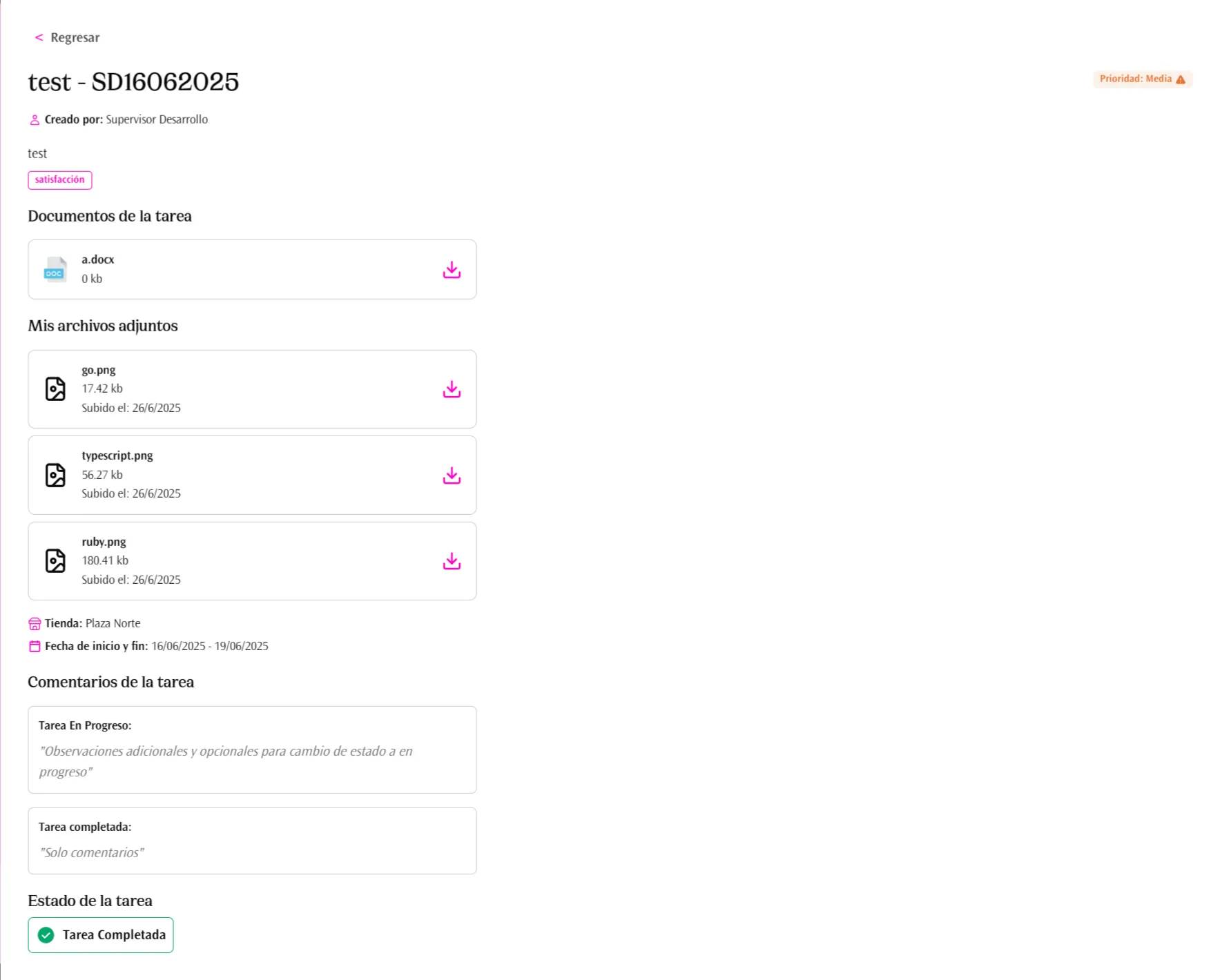
- Task management: rich-text creation, assignment to several stores at once, statuses, priority, dates and filters by worker.
- Surveys and checklists: an editor to build them and views to review each worker's answers on each task.
- Attachments and comments at every task status, and recurring tasks, shipped to production.
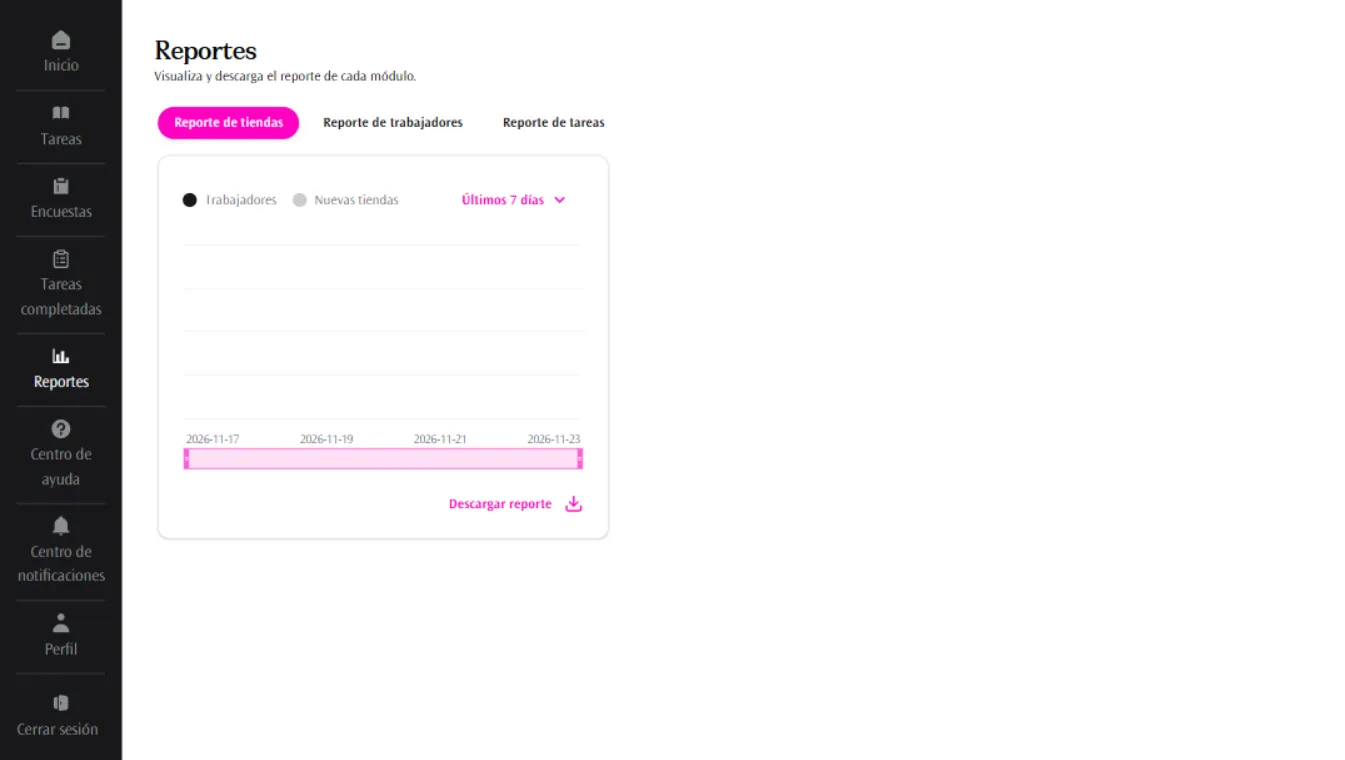
- Reports and indicators with charts and completion rates by store, by worker and by task, downloadable as Excel.
- A modular front-end architecture with Next.js 14 and TypeScript, and the technical manual for the team to follow it.
Screenshots
Lessons learned
Order so others can follow
Defining where each component, service and piece of state goes, and writing it down in a manual, made it possible to add modules without making a mess of the code.
A task is its history
With attachments and comments at each status, a to-do list became a record of what actually happened in each store.
Three environments, zero surprises
Local, staging and production with variables validated with Zod: if one is missing, the app warns you before it fails.
What I would do differently
The manager and supervisor views share a lot, but they live in separate modules. Today I would pull that shared logic into common pieces from the start: less repeated code and changes in a single place.